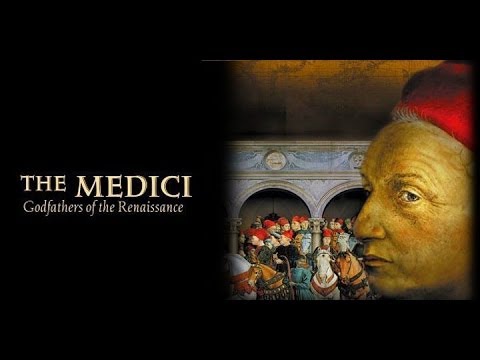
LOS MEDICI. EL NACIMIENTO DE UNA DINASTÍA. CAPITULO 1.
The Rise of the Medici: Power and Influence in Renaissance Florence
The Early Life of Cosimo de' Medici
- Cosimo de' Medici, born to a merchant family, was baptized into a medieval world where power was intertwined with crime, intrigue, and war.
- Despite humble beginnings, the Medici family sought to gain influence and eventually aimed for the papacy while supporting artists like Michelangelo and Botticelli.
The Birth of the Renaissance
- The term "Renaissance" signifies a rebirth of classical knowledge that would resonate through centuries.
- In the early 15th century, men were on a quest across Europe for ancient treasures—not relics or icons but lost knowledge hidden within church crypts.
Quest for Ancient Knowledge
- Cosimo de' Medici and his contemporaries pursued secrets from antiquity, believing that classical achievements had not been surpassed.
- This pursuit led to an enthusiasm for uncovering ancient sculptures and manuscripts, which represented a different way of life but also posed dangers.
Florence: A Unique City in Europe
- By 1400, Florence stood out as a major commercial republic in Tuscany where powerful families vied for political control.
- The city was likened to Paris in the late 19th century; it was at its cultural peak during the 14th and 15th centuries.
The Rise of the Medici Bank
- Giovanni de' Medici established their banking operations from modest beginnings focused on loyalty as well as profit.
- Giovanni's strategic partnerships allowed him to navigate through societal networks effectively, leading to significant financial success.
Political Maneuvering and Papal Connections
- Giovanni supported Baltasar Cosa (later Pope John XXIII), recognizing that chaos within the Church could be exploited for financial gain.
- With their backing, Cosa became pope in 1410; this solidified the Medici's status as "bankers of God," controlling papal finances.
Challenges Facing Florence
- Despite their rise, prominent Florentine families faced humiliation due to an unfinished cathedral project symbolizing community identity.
- The lack of completion represented not just architectural failure but also a loss of communal pride; thus began efforts to find innovative solutions under Cosimo’s leadership.
The Genius of Filippo Brunelleschi
The Unconventional Mind of Brunelleschi
- Filippo Brunelleschi, a self-taught genius, was obsessed with ancient world mysteries and had unconventional ideas that were often difficult to understand.
- Despite being labeled a genius, he was not someone people were eager to meet due to his unorthodox style and the enmities it created.
- He had numerous disputes with city leaders and was once forcibly expelled from the government palace after losing his temper.
Support from the Medici Family
- The Medici family became patrons of Brunelleschi, willing to invest in his innovative ideas which aimed to revive forgotten architectural concepts.
- His work on a new orphanage in Florence showcased classical architecture principles not seen for about a thousand years, astonishing Florentines who watched him work.
Architectural Revolution
- From Brunelleschi's turbulent mind emerged a vision of classical simplicity that would revolutionize architecture across Europe.
- This innovation marked just the beginning of an ambitious partnership between Brunelleschi and the Medici family.
Challenges with the Dome Project
- Cosimo de' Medici shared a close relationship with Brunelleschi, aligning their visions for recreating a grand classical city reminiscent of Rome.
- With support from Cosimo, Brunelleschi tackled the challenge of constructing Florence's dome, which posed significant difficulties as ecclesiastical authorities sought solutions.
Ingenious Problem Solving
- Faced with skepticism about his design for an unprecedented dome without scaffolding, he coded his calculations to protect his ideas from theft.
- To demonstrate ingenuity, he challenged skeptics by balancing an egg upright; when they failed, he secured approval for his dome project.
Historical Inspirations
- Undertaking this monumental task meant rewriting Western architectural norms without any guarantees of success; inspiration came from ancient Roman structures like the Pantheon.
- The Pantheon served as both an architectural marvel and a source of techniques that influenced Brunelleschi’s designs.
Construction Techniques Rediscovered
- He studied not only proportions but also construction details used in ancient buildings like the Pantheon which had survived through time.
- Notably, architects in ancient Rome supported their domes using wooden scaffolding—a method impractical for Florence's cathedral due to material shortages.
Innovative Design Implementation
- Without sufficient wood available for scaffolding during construction, Brunelleschi devised methods allowing his dome to support itself throughout its building phase.
The Struggles of Cosimo de' Medici
The Daily Life and Challenges in Florence
- Workers would have lunch at the top of the dome to avoid exhaustion from climbing back up after descending for meals, highlighting the physical demands of their labor.
- Giovanni de' Medici, aware of the dangers in Florence, advised his son Cosimo to maintain a low profile and avoid drawing attention to himself.
- Giovanni passed away in 1429, leaving behind a modest legacy that deeply affected Cosimo's future as he lost his guiding figure.
The Impact of Giovanni's Death
- The city mourned Giovanni’s death; he was seen as a humble patron whose absence cast uncertainty over the Medici family's future.
- Local customs dictated that Giovanni's body pass through his home before burial, symbolizing closure and respect for his life.
- With Giovanni gone, Cosimo faced immense pressure to uphold his father's legacy while navigating rivalries with established families like the Albizzi.
Political Tensions and Rivalries
- The rivalry between the Medici and Albizzi families posed significant threats; any internal conflict could jeopardize both family legacies and plunge Florence into chaos.
- Brunelleschi faced monumental engineering challenges while constructing the dome, including lifting heavy stone beams without precedent in engineering history.
Engineering Innovations by Brunelleschi
- Brunelleschi devised an innovative mechanism allowing oxen to lift heavy loads vertically while maintaining control over their movement direction.
- As tensions rose in Florence due to increasing wealth among rivals, Cosimo took precautions by transferring money out of the city for safety.
A Critical Moment for Cosimo
- During intense political strife (1420–1430), bribery became commonplace as factions vied for power within Florence.
- On September 7, 1433, Cosimo was summoned to government headquarters where enemies plotted against him amid rising tensions with the Albizzi family.
Imprisonment and Survival Strategies
- After being imprisoned under dire circumstances where torture was used against allies for evidence against him, Cosimo found himself vulnerable yet resourceful.
- Fearing execution during this tumultuous period marked by political violence, he relied on connections even from adversaries to negotiate his release.
Consequences of His Imprisonment
- Despite being declared guilty of treason through a public vote orchestrated by enemies who controlled access to power structures in Florence, Cosimo managed to survive thanks to strategic negotiations.
Return of Cosimo de' Medici
The Struggle for Control in Florence
- Cosimo recalls his father's advice about reclaiming the city, emphasizing the importance of patience and strategy.
- Without financial support, the citizens of Florence quickly grew disillusioned with the Albizzi family, leading to their loss of control over the city within a year.
- Powerful allies, including representatives from the Pope, arrive in Florence as Cosimo's exile ends; he returns with many supporters amidst heightened security.
- Upon being offered control of Florence, Cosimo accepts modestly, indicating a strategic approach to leadership.
Consolidation of Power
- Cosimo's revenge against opponents was selective yet severe; he preferred clear gestures that publicly humiliated adversaries.
- He effectively controlled peace and war decisions while managing laws without needing an official title like "king."
Economic Expansion and Influence
- Under Cosimo’s leadership, the Medici Bank expanded significantly, opening branches across Europe and collecting funds from churches.
- The Pope himself established a substantial line of credit with the Medici Bank, making it one of Europe's most profitable businesses.
Patronage and Artistic Development
- With a passion for art and talent recognition, Cosimo became a prominent patron in Florence by commissioning works from top artists.
- His spending on art was politically motivated; this patronage fueled competition among artists and contributed to an unparalleled artistic market during the Renaissance.
The Role of Artists in Society
- During this period, artists relied heavily on commissions rather than public sales; they needed patrons like Cosimo to fund their work upfront.
- Notably faced challenges with artist Filippo Lippi due to his rebellious nature; understanding that happiness enhances productivity led Cosimo to adopt a more humane management style.
Challenges Faced by Artists
- Despite ample funding in Florence for artists, not all projects provided equal visibility or dignity for creators seeking credibility.
- Filippo Brunelleschi emerged as a revolutionary figure who transformed Western art through innovative techniques such as linear perspective.
Innovations in Art Techniques
- In 1434, Brunelleschi introduced perspective techniques that created three-dimensional representations in art—shifting away from flat Gothic styles.
Cosimo de' Medici and the Renaissance
The Relationship Between Cosimo and Donatello
- Cosimo was dedicated to maintaining his friendship with Donatello, despite facing aggressive comments from others. He aimed to demonstrate that he valued integrity and talent over personal issues.
- Donatello's "David" is highlighted as a revolutionary artwork of the 15th century, marking a significant return to classical themes by creating a freestanding bronze sculpture of a nude man.
- The symbolism in "David," particularly the head of Goliath at his feet, represents victory but also carries an erotic undertone that was controversial among Florentines due to societal norms regarding sexuality.
Artistic Freedom in Florence
- Cosimo provided artists and writers with a platform to explore new ideas that challenged Catholic orthodoxy, fostering an environment ripe for innovation.
- Brunelleschi's architectural advancements were pivotal; he faced critical challenges while constructing the dome of Florence Cathedral, particularly ensuring structural integrity without visible supports.
Brunelleschi's Architectural Innovations
- To prevent bricks from collapsing inward during construction, Brunelleschi ingeniously used vertical strips to secure horizontal rows of bricks together.
- His unique herringbone brick pattern had never been attempted before; any miscalculation could lead to catastrophic failure, making this project both ambitious and risky.
The Impact of the Dome on Florence
- Brunelleschi personally oversaw many aspects of construction, even laying bricks himself to instill confidence among workers who doubted the viability of his methods.
- In 1436, Brunelleschi successfully completed the dome without scaffolding or external support—an extraordinary feat symbolizing Florence’s architectural prowess and pride.
Celebrating Success and Cultural Flourishing
- The completion of the dome elevated Cosimo’s status as it reflected not only his power but also marked Florence as a center for art and culture during the Renaissance.
- Following this triumph, Cosimo organized an international exhibition celebrating Florentine art and culture, attracting thinkers from diverse backgrounds including Eastern cultures.
Legacy of Cosimo de' Medici
- By financing travel for exotic guests from legendary lands like India, Cosimo enriched cultural exchanges in Florence under the shadow of Brunelleschi's dome.
- Despite overseeing great achievements for Florence, Cosimo remained cautious about his legacy; he understood that while he might be gone one day, his buildings would endure as symbols of his influence.
Turn any video into a summary like this
YouTube links, meetings, lectures — with transcripts, search, and chat.