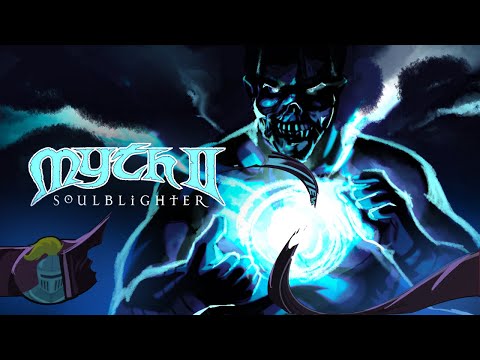
Myth 2: Soulblighter Review
Introduction and Setting
This section introduces the game and provides an overview of the setting.
Game Setup
- The game is easier to set up compared to its predecessor, Fallen Lords.
- There are no options to check or levels to download; simply complete the tutorial and start playing.
Setting
- The game takes place after the Great War, with a 10-year-old child discussing its end.
- Alric, who escaped in a murder of crows during the war, is now king and has nightmares about it.
- The story revolves around Alric's return and whether it's for revenge or something greater.
Graphics and Visual Improvements
This section focuses on the graphical enhancements in Myth II compared to its predecessor.
Improved Graphics
- Myth II features more detailed maps with livestock, wildlife, and additional 3D objects.
- The landscapes are richer, animations are smoother, and there is an overall increase in detail.
- Character designs have been improved with appealing designs and smart use of color.
- Cutscenes have received a significant facelift with better artwork and narration.
Audio Enhancements
This section discusses the audio improvements in Myth II.
Ambient Sounds
- Ambient sounds have been improved with more variety.
- However, there is still no music during gameplay.
Voice Acting
- Voice acting quality remains similar to the previous game, both in highs and lows.
- Some humorous dialogue exchanges showcase voice acting reminiscent of Thief-like conversations.
Story Elements
This section highlights some story elements mentioned in the transcript.
Story Development
- Rurik informs the mayor of Tallow about brigands taking corpses to a castle near Brayle.
- The story unfolds as players progress through the game.
The transcript does not provide timestamps for all bullet points.
New Section
This section discusses the urgency to meet the mayor of Tallow and introduces the music in the game.
Meeting with the Mayor
- Rurik, one of the village leaders, demands to see the mayor of Tallow.
Music in the Game
- The music in this sequel is more bold and can range from somber emotional tracks to fast, aggressive military marching beats.
- The percussion is ramped up, featuring big echoey drums that take center stage.
- There are moments where the music turns slow and haunting, reminiscent of Phil Collins about to start singing.
- The music enhances certain briefings and brings them to a new level.
New Section
This section highlights some gameplay changes and introduces new units in the sequel.
Gameplay Changes
- The sequel includes new units and additions/changes to existing units.
- Archers in the Fallen Lords were fir’Bolg but now they are human archers who can use a flaming arrow ability to set terrain on fire.
- Forces of evil have recruited new races onto their side, including bizarre undead like Stygian Knights who are immune to arrows.
New Section
This section focuses on AI behavior and unit scripting in Myth II.
AI Behavior
- In Myth II, AI behavior is tailored for each mission based on unit placement and designated points on the map.
- While AI cannot fully take control, it adds reactive gameplay elements as designers anticipate player actions and unit positions throughout campaigns.
- The AI scripting makes the campaign more challenging and reactive compared to other RTS games.
New Section
This section discusses improvements in accuracy and gameplay experience in Myth II.
Improved Accuracy
- In Myth II, accuracy has been improved, making units feel more reliable and less frustrating compared to the first game.
- Dwarf explosions are better controlled, allowing for closer range risks without constantly exploding oneself.
Gameplay Experience
- The game is still challenging with difficult missions, but it feels overall fairer compared to the first game.
- The difference between difficulty settings can significantly alter mission environments and strategies.
- Myth II offers a unique feature where environmental changes based on difficulty add to the gameplay experience.
New Section
This section highlights experimentation and innovation in Myth II.
Unique Features
- Myth II introduces innovative features like altering mission environments based on difficulty settings, which is uncommon in the genre.
- The game surprises and impresses with its ambition and experimentation even in small details like environment changes.
New Section
This section briefly mentions formations, unit engagement, and a fun fact about Myth II.
Formations and Unit Engagement
- Formations feel snappier in Myth II, while how groups of units engage each other feels slightly different from the previous game.
Fun Fact
- A major bug was found by a third-party translator during the release of Myth 2 that caused confusion with the Fallen Lords game.
The Decision to Announce the Game
This section discusses the decision to announce the game despite its expensive and logistically challenging nature. The person behind the decision believed it was the right thing to do, showcasing a level of integrity uncommon in AAA games.
Announcement Option vs. Expensive Decision
- The game announcement was expensive and posed logistical challenges.
- Realistically, they could have chosen the announcement option instead.
- However, the person responsible for the decision believed that announcing the game was expensive but the right thing to do.
- This decision demonstrated a level of integrity rarely seen in AAA games.
Niche Issues and Misconceptions
This section highlights how niche issues can be overlooked or misunderstood in today's gaming industry.
Niche Issue with Uninstaller
- If someone were to ask their boss to delay a game due to a major (but niche) issue with the uninstaller, they might not understand it well enough.
- There is a misconception that this story refers to the first game, but it actually pertains to Soulblighter.
Campaign Introduction and Necromancers
This section introduces the campaign and explores necromancers within the game's setting.
Undead Attacks and Necromancers
- A town being attacked by undead is alarming but not catastrophic.
- Balor, unlike other necromancers in history like The Watcher, practices necromancy on another level.
- Crüniac's investigation reveals that local bandits have been taking villagers away to a nearby graveyard.
- It is possible that these attacks are orchestrated by a minor D&D boss rather than a warlord.
Journey to Tallow
This section follows the protagonist's journey to the nearby town of Tallow.
Villagers and Prisoners
- Despite clearing the graveyard, the attacks continue.
- A villager leads the protagonist to the nearby town of Tallow to consult their mayor.
- If the villager doesn't survive, it reminds us of events from the 90s game era.
Secret Mission and Consulting the Mayor
This section discusses a secret mission and consulting with Tallow's mayor.
Secret Mission and Frog Killing
- Killing frogs unlocks a secret mission, but it is more of a joke compared to one in Fallen Lords.
- The secret mission involves deer hunting with sound hunting advice.
- However, it is challenging due to aggressive deer and powerful blunderbusses.
Consulting with Mayor
- After consulting with the mayor, it is revealed that corpses are being taken to a nearby castle ruled by a baron.
- Attacking the keep directly seems like a better option than facing hordes of undead outside.
Infiltrating the Keep
This section focuses on infiltrating the keep and encountering new gameplay improvements.
Meeting Politicians in Unexpected Ways
- Crüniac meets politicians and shakes hands in an unexpected manner during this mission.
- The mission showcases various improvements in Myth 2, such as functional gates and a moving 3D drawbridge.
- Infiltration into the keep is done using a dwarf infiltrator who arrives during this same mission.
Story Progression and Soulblighter's Role
This section explores how story progression may be affected by revealing Soulblighter's involvement early on.
Story Progression and Soulblighter
- Investigating the source of undead attacks may not be compelling when it is known that Soulblighter is behind it.
- The keep is stormed, and the soldier gains new respect for Crüniac until a shocking incident occurs.
- Crüniac strangles one of the prisoners, shaking him out of some kind of enchantment.
Devastation and Retreat
This section highlights the devastating impact of the undead attacks and the subsequent retreat.
Destruction and Retreat
- As messengers arrive, it becomes clear that every town outside the keep has been completely destroyed by undead.
- Crüniac orders the keep to be destroyed to avoid capture and initiates a general retreat.
- The baron may have been unwillingly involved in supplying undead due to their overwhelming numbers.
Tragic Losses
This section focuses on tragic losses during the battle against Soulblighter's forces.
Tragic Losses
- Crüniac is reported dead, with Garrrick witnessing his last moments.
- Despite being mortally wounded, Crüniac praises the bravery of his color guard who sacrificed themselves to save him from Soulblighter's killing blow.
Realistic Heroism
This section reflects on Crüniac's heroism as an ordinary person facing extraordinary circumstances.
Understated Heroism
- Crüniac was not a chosen one or a legendary figure but just an ordinary person who rose to the challenge during a time of crisis.
- His last words praised the bravery of others, showcasing true-to-life heroism that fantasy stories often struggle to portray.
Introduction to the First Game
The narrator introduces the first game and its storyline.
Key Points:
- The first game is discussed, but no specific details are provided.
Teleportation to Soulblighter's Camp
The Deceiver teleports the group into Soulblighter's camp, putting them in danger. The emperor is unaware of their location and cannot save them.
Key Points:
- The Deceiver teleports the group into Soulblighter's camp.
- The narrator realizes that the Deceiver acted on his own volition, which puts everyone at risk.
- The emperor is unaware of their location and cannot come to their rescue.
- All members of the group, including the Deceiver, are captured.
Imprisonment and Torture by Phelot
The prisoners reveal that Shiver has destroyed the Western lands. They are imprisoned and tortured by a shade named Phelot. There is chaos as some speculate that the Deceiver mind-controlled Phelot.
Key Points:
- Shiver has completely destroyed the Western lands.
- All prisoners, including the group and the Deceiver, are imprisoned and tortured by Phelot.
- Speculation arises about whether Phelot was mind-controlled by the Deceiver during the chaos.
Attempted Prison Break
A massive prison break takes place with prisoners helping each other escape. They also free the Deceiver from his special containment chamber.
Key Points:
- A prison break occurs with prisoners assisting each other in escaping.
- The prisoners manage to free the Deceiver from his special containment chamber.
Confrontation with Soulblighter
The group realizes that they cannot defeat Soulblighter in combat. The Deceiver uses an item to absorb Soulblighter's lightning attack.
Key Points:
- The group acknowledges that they are unable to defeat Soulblighter in combat.
- The Deceiver uses an item to absorb Soulblighter's lightning attack.
Secret Mission or Next Favorite Moment
The group has the option to exit to a secret mission, but the narrator prefers the next moment in the game. The secret level is mentioned as being fun.
Key Points:
- There is an option to proceed with a secret mission.
- The narrator expresses a preference for the next moment in the game.
- The secret level is described as enjoyable.
Regrouping and Fighting Shiver
The Deceiver takes one of the crows from Soulblighter's murder form, preventing him from transforming into birds again. They regroup with the main force fighting Shiver downstream of a river and a dam.
Key Points:
- The Deceiver acquires one of the crows from Soulblighter's murder form.
- Without this crow, Soulblighter cannot transform into birds again.
- They regroup with the main force engaged in battle against Shiver downstream of a river and a dam.
Destroying the Dam
It is revealed that destroying the dam would result in a devastating deluge that could kill everything in its path for miles. The Deceiver decides to head downstream instead of staying to defend the dam.
Key Points:
- Destroying the dam would cause a deluge capable of killing everything for miles.
- Despite this danger, the Deceiver chooses not to stay and defend it.
- He heads downstream, leaving others puzzled about his actions.
The Deceiver's True Motives
The Deceiver's true motives are revealed. He goes to warn the Emperor about the impending danger, showing loyalty and concern for Alric.
Key Points:
- The Deceiver's true motives are explained.
- He goes to warn the Emperor about the danger they face.
- His actions demonstrate loyalty and concern for Alric.
Unexpected Heroism of the Deceiver
The Deceiver's unexpected heroism is highlighted. Despite his appearance and name, he proves to be a force for good throughout the game.
Key Points:
- The Deceiver's unexpected heroism is emphasized.
- Despite his comically evil appearance and name, he consistently acts in a heroic manner.
- His motivations remain unclear but his actions speak volumes.
A Dark Fantasy Version of the Grinch
The depiction of the Deceiver as a deranged man with a big heart is likened to a dark fantasy version of the Grinch. His character remains intriguing due to unexplained motivations.
Key Points:
- The Deceiver is portrayed as a deranged man with a big heart.
- This portrayal resembles a dark fantasy version of the Grinch.
- His motivations are not fully elaborated upon, adding intrigue to his character.
Seeking Retribution against Shiver
The group saves the dam but Shiver remains at large. The Deceiver passionately calls for her blood, seeking retribution.
Key Points:
- Although they save the dam, Shiver still poses a threat.
- The Deceiver passionately demands revenge against Shiver.
Confrontation with Shiver and Phelot
The Emperor assigns five volunteers, including the Deceiver, to try and kill Shiver. A confrontation ensues between the Deceiver and Shiver, with Phelot involved.
Key Points:
- The Emperor assigns a squad of five volunteers, including the Deceiver, to kill Shiver.
- A confrontation occurs between the Deceiver and Shiver.
- Phelot is also present during this encounter.
Defeat of Shiver
The Deceiver defeats Shiver with the help of Phelot. The outcome suggests that Shiver is killed.
Key Points:
- The Deceiver manages to defeat Shiver.
- Phelot assists in this victory.
- It is implied that Shiver is killed.
Conclusion of the Transcript
The narrator reflects on witnessing an extraordinary display of Alric's swordsmanship but notes that there is no further mention of the Deceiver's fate.
Key Points:
- The narrator acknowledges witnessing an extraordinary display of Alric's swordsmanship.
- There is no further mention or clarification regarding the fate of the Deceiver.
New Section
This section discusses the concept of the W’rkncacnter, eldritch beings in the game Myth, who have the power to shape the land and create monsters. The source of all magic in the setting is likely connected to these beings. The story of Marathon, another game, is mentioned but deemed less relevant.
The Power of W’rkncacnter
- The W’rkncacnter are powerful beings that cannot die but can be put to sleep.
- They have the ability to shape the land and create monsters.
- Lesser beings created by them also possess some power but it is significantly weaker compared to the W’rkncacnter themselves.
- These beings may drift for millions or billions of years until they collide with a planet and get buried.
- The source of all magic in the setting is likely connected to these creatures.
New Section
This section explores how the story of Marathon, another game, does not play a significant role in Myth. It discusses Soulblighter as an evil villain and his knowledge about Alric being the next Leveler.
Importance of Marathon's Story
- Despite mentioning connections between Marathon and Myth, it is stated that Marathon's story does not matter much in Myth.
- The world of Myth operates under its own rules governed by a comet-like object that could be artificial or naturally occurring.
- Soulblighter, an evil villain in Myth, knows about Alric being the next Leveler due to his past association with Balor and Connacht.
- Soulblighter's motivations are ambiguous - he may aspire to become the Leveler or he may be trying to free the world in his own deranged way.
New Section
This section compares the storytelling in Myth and its sequel, Myth 2: Soulblighter. It highlights the strength of the story in Fallen Lords and the character development in Myth 2.
Storytelling in Myth and Myth 2
- The Fallen Lords is considered a tighter tale with compelling storytelling throughout the campaign.
- In comparison, Soulblighter, the sequel, feels like it has more tire spinning and less compelling storytelling.
- However, even though some characters are not directly elaborated on, they still have history and intrigue surrounding them.
- The setting and characters of Myth are so compelling that even though evil forces are called 'The Dark', it doesn't diminish their appeal.
New Section
This section briefly discusses Myth 2: Chimera, a side adventure set in the same world as Myth. It also mentions how this expansion was created by fan map makers with support from Bungie.
Myth 2: Chimera
- Myth 2: Chimera takes place a decade after Myth 2 and follows a journeyman having visions of a mysterious woman summoning undead.
- The campaign for Chimera was initially created by fan map makers but later received support from Bungie to make it official.
- Bungie employees provided voice acting for main characters in Chimera, including Joseph Staten and Martin O'Donnell.
New Section
This section discusses the design of Chimera levels and how they can be challenging for players. It also highlights the fun and engaging missions present in Chimera.
Design of Chimera Levels
- The levels in Chimera can be incredible and showcase what can be done within the game engine.
- Some levels are designed specifically to challenge experienced players with ambushes triggered by certain types of units passing specific points.
- Despite the difficulty, Chimera still offers some of the most fun and engaging missions in the series.
New Section
This section briefly mentions Myth 3, a prequel to Myth made by a different company. It concludes by praising Soulblighter as a fantastic sequel with improved gameplay and added content for multiplayer.
Myth 3 and Conclusion
- Myth 3 is mentioned as a prequel made by a different company that went in their own direction instead of following Bungie's vision.
- Soulblighter is praised as a fantastic sequel with improved gameplay and added content for multiplayer, including a map maker and new modes.
- The story in Soulblighter keeps pace with the gameplay, resulting in Bungie successfully creating their big war game.
New Section First a dungeon crawler turned into a trilogy of innovative sci-fi FPS games, and then a
The speaker discusses the transformation of a dungeon crawler game into a trilogy of innovative sci-fi first-person shooter (FPS) games.
Dungeon Crawler to Sci-Fi FPS Trilogy
- The game initially started as a dungeon crawler.
- It later evolved into a trilogy of innovative sci-fi FPS games.
- The transition from the original concept to the sci-fi genre brought significant changes to the gameplay and overall experience.