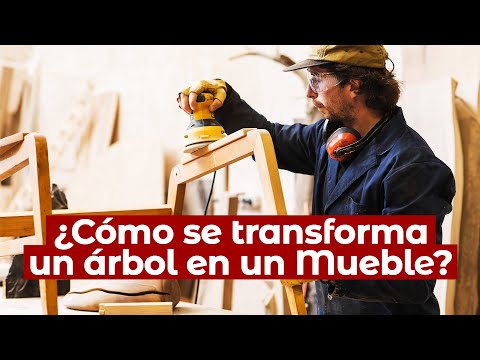
🌳 ¿Cómo se FABRICAN los MUEBLES? - Conoce el PROCESO INDUSTRIAL de la MADERA
History and Process of Furniture Manufacturing
Origins of Furniture
- The earliest furniture was not human-made but derived from natural objects used in ancient times.
- The production of wooden furniture began due to the material's abundance and ease of manipulation.
- Ancient Egypt provides some of the oldest records, notably from the discovery of Tutankhamun's tomb in 1925, which contained luxurious wooden furniture dating back to the 14th century BC.
Evolution Over Time
- Since its inception nearly 3,000 years ago, furniture design and manufacturing have evolved significantly.
- Furniture has transitioned from purely functional items to pieces that can be considered true works of art.
Modern Manufacturing Insights
- Introduction to Magath, a leading wood furniture manufacturer with over 20 years in the industry, processing approximately 3,250 cubic meters of wood annually.
- The company focuses on providing comprehensive solutions for Chilean households through continuous improvement in production systems.
Production Process Overview
Key Areas in Furniture Manufacturing
- Forest: Source of raw materials needed for furniture production. Wood is primarily sourced from their own forests.
- Sawmill: Where logs are cut into two pieces for further processing.
- Pressing Area: Responsible for shaping boards used in furniture construction.
Detailed Steps in Production
- Log Processing: Logs arrive at the plant via trucks and undergo debarking before being processed into veneers with varying thicknesses (12mm and 2mm).
- Drying Process: Wood moisture content is reduced from around 50%-60% to an optimal level of 18% for stability during manufacturing.
- Board Assembly: Veneers are glued together using urea-formaldehyde adhesive before being pressed under heat and pressure until set (fraguado).
Final Stages Before Distribution
Finishing Touches on Furniture
- After board assembly, pieces are dimensioned and prepared for assembly where they are sanded down and defects corrected if necessary.
- The painting process involves staining to add color followed by sealing all pores to prevent moisture ingress into finished products; this includes a drying phase at controlled temperatures (18°C - 23°C).