The Endocrine System
Introduction to the Endocrine System
Overview of Robert Wadlow and Pituitary Giants
- Mr. Anderson introduces Robert Wadlow, the tallest man in modern history, who was 8 feet 11 inches tall due to a pituitary tumor causing excessive growth hormone production.
- The pressure from the tumor led to health complications, including circulation problems and blood clots, resulting in his early death.
Comparison of Endocrine and Nervous Systems
- The nervous system is composed of neurons that transmit signals unidirectionally through synapses, akin to sending emails quickly.
- In contrast, the endocrine system functions like social media (e.g., Facebook), where hormones are released into the bloodstream and take time for responses.
Key Terms in Endocrine System
Glands and Hormones
- Glands are responsible for sending messages in the endocrine system; these messages are called hormones.
- Hormones can target specific cells or have widespread effects; for example, follicular stimulating hormone targets ovaries/testes while growth hormone affects all body cells.
Mechanisms of Hormone Action
Water-Soluble vs. Lipid-Soluble Hormones
- Water-soluble hormones (e.g., epinephrine/adrenaline) bind to surface receptors on target cells since they cannot enter directly.
- Lipid-soluble hormones (e.g., testosterone) can pass through cell membranes and directly influence gene expression within the nucleus.
Major Glands of the Endocrine System
Pineal Gland
- The pineal gland secretes melatonin at night, helping regulate circadian rhythms based on light exposure.
Hypothalamus and Pituitary Gland
- The hypothalamus connects the brain with the endocrine system and influences pituitary function.
- The anterior pituitary releases several hormones including growth hormone which promotes cell growth throughout the body.
Thyroid Gland
- The thyroid produces T3 and T4 hormones that regulate metabolism; an overactive thyroid leads to high metabolism while an underactive one results in low metabolism.
Parathyroid Gland
- Located within the thyroid, parathyroid glands secrete parathyroid hormone which raises blood calcium levels when they drop too low.
Pancreas Functionality
Insulin and Glucagon Regulation
- The pancreas contains beta cells that secrete insulin to lower blood sugar levels and alpha cells that release glucagon to raise them as needed.
Adrenal Glands
Adrenal Cortex vs. Medulla
- The adrenal cortex secretes glucocorticoids which help manage inflammation; this process is slower compared to immediate responses from adrenaline produced by the adrenal medulla during stress situations.
Sex Hormones
Ovaries and Testes Functions
- Ovaries produce estrogen while testes produce testosterone; both are crucial for developing secondary sex characteristics during puberty triggered by signals from the pituitary gland.
Recap of Key Concepts
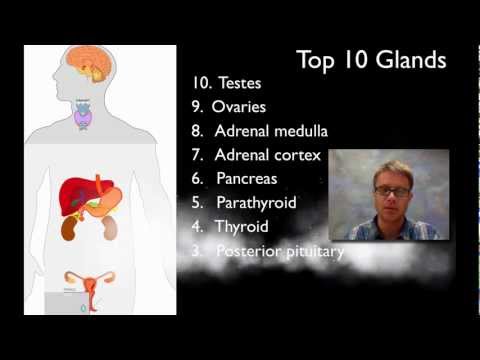
- A review session prompts recall of glands such as testes (testosterone), ovaries (estrogen), adrenal medulla (epinephrine), pancreas (insulin/glucagon), parathyroid (parathyroid hormone), thyroid (calcitonin/T3/T4), posterior pituitary (ADH), anterior pituitary (growth hormone), and pineal gland (melatonin).
Turn any video into a summary like this
YouTube links, meetings, lectures. With transcripts, search, and chat.