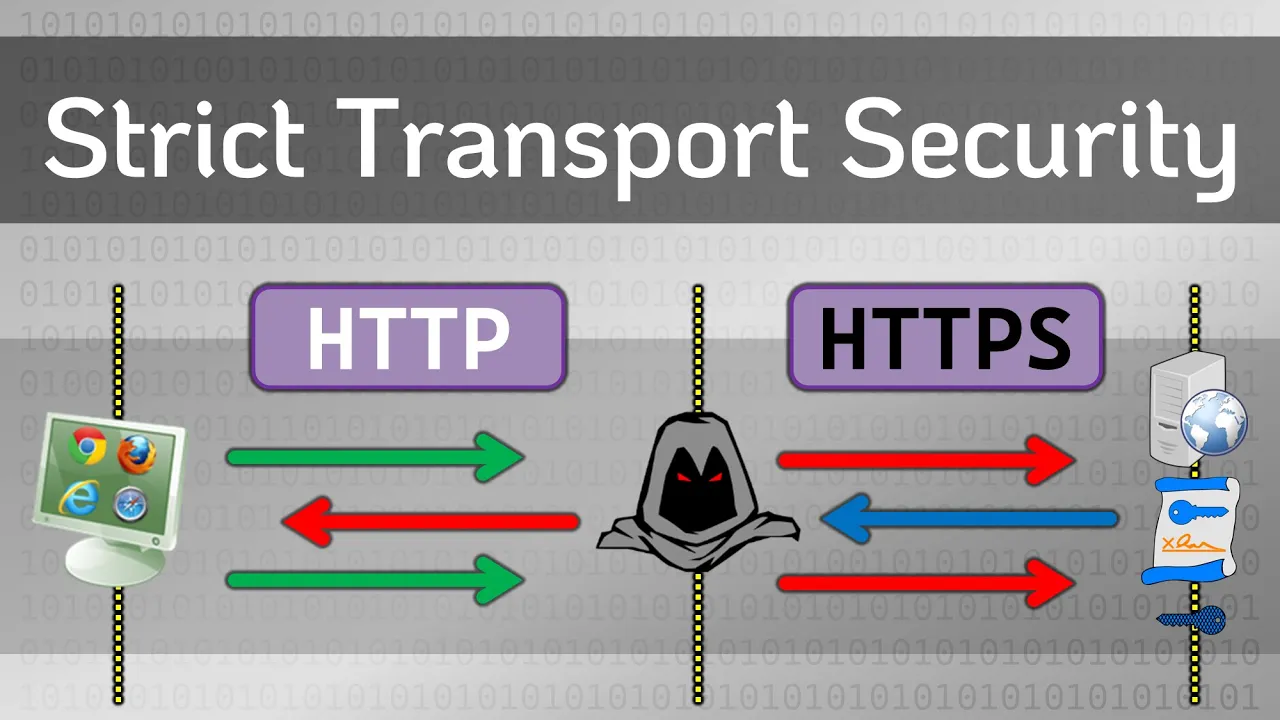
HSTS - HTTP Strict Transport Security - Protect against SSL Stripping attack - Practical TLS
Understanding HTTP Strict Transport Security (HSTS)
In this section, the concept of HTTP Strict Transport Security (HSTS) is introduced by highlighting the problem it aims to solve in securing web communications.
The Problem with Initial HTTP Requests
- Clients often initiate requests over HTTP instead of HTTPS, leading to potential security vulnerabilities.
- Web servers may redirect initial HTTP requests to HTTPS for security but leave the first interaction vulnerable to attacks.
SSL Stripping Attack
- SSL stripping attack explained where a man-in-the-middle intercepts and alters communication between client and server.
- Details on how sensitive information can be intercepted during an SSL stripping attack.
Introduction to HSTS and Moxie Marlinspike
- Explanation of SSL stripping attack led to the development of tools like "sslstrip" by Moxie Marlinspike.
- Reference to Moxie's talk at Defcon 17 in 2009 unveiling sslstrip tool for public use.
Implementing HSTS Directives
This section delves into how HSTS directives are implemented to enforce secure connections via HTTPS.
Max Age Directive
- Explanation of the max age directive ensuring all future requests are made over HTTPS for a specified duration.
Live Demonstration with Google Chrome
- Live demonstration showcasing automatic redirection from HTTP to HTTPS using Google Chrome's developer tools.
- Highlighting how HSTS directives prevent man-in-the-middle attacks by enforcing secure connections.
Include Subdomains Directive
HTTP Strict Transport Security (HSTS) and Preloading
This section discusses the implementation of HTTP Strict Transport Security (HSTS) and its preloading feature to enhance website security.
HSTS Implementation
- HSTS directives are not received over HTTP, leaving the first visit vulnerable to SSL stripping.
- Three HSTS directives:
max-age,includeSubDomains, andpreload.
- HSTS disables users from bypassing SSL/TLS warnings for listed websites.
- Directives can be sent in a single line for practicality.
Preloading Process
- Browsers maintain a list of websites for mandatory HTTPS access via preloading.
- Web server operators can apply for pre-load status by submitting their sites.
Conclusion and Additional Information on HSTS
The conclusion highlights key takeaways about HSTS, its benefits, and how it enhances web security.
Key Takeaways
- Understanding the purpose of HSTS in protecting against vulnerabilities.
- Learning about the three HSTS directives:
max-age,includeSubDomains, andpreload.
Course Recommendation
- Practical TLS course offers in-depth knowledge on SSL/TLS protocols.