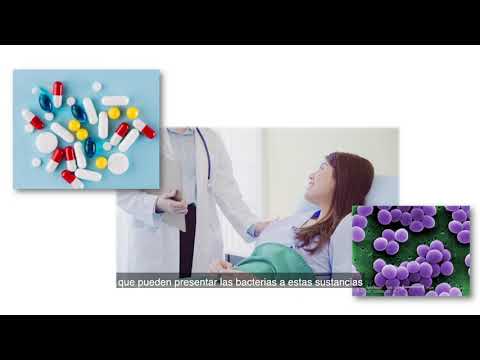
2. Antimicrobianos ¿Qué son y cómo actúan?
Introduction to Antimicrobial Resistance
Overview of Antimicrobials
- The course introduces antimicrobial resistance and advanced technological tools for its surveillance, starting with Alexander Fleming's discovery of penicillin in 1928.
- This marked the beginning of a significant therapeutic approach in medicine, highlighting that many antimicrobials are naturally occurring and that resistance is a natural event.
Understanding Antimicrobials
- The session aims to define antimicrobials, classify them, and discuss their use in human and veterinary medicine.
- Antimicrobials are defined as chemical substances (natural or synthetic) that can kill or inhibit microorganisms like fungi, bacteria, or parasites; they also prevent viral replication.
Classification of Antimicrobials
Categories Based on Target Organism
- Classification criteria include target organism, spectrum of action, effect on bacteria, chemical structure, and mechanism of action.
- Antifungals: Used for fungal infections; examples include miconazole for skin and mucosal infections.
Types of Antiparasitics and Antivirals
- Antiparasitics: Treat infections caused by parasites (e.g., protozoa, helminths).
- Antivirals: Treat viral infections; examples include abacavir and tenofovir for HIV treatment.
Focus on Antibiotics
Importance in Medicine
- The WHO lists critically important antimicrobials for human health; priority includes third to fifth generation cephalosporins and polymyxins due to their role in treating severe bacterial infections.
Spectrum of Action
- Antibiotics are classified based on their spectrum: broad-spectrum antibiotics act against a wide range of bacteria (e.g., ciprofloxacin), while narrow-spectrum antibiotics target specific bacteria.
Mechanisms of Action
Effects on Bacteria
- Bacteriostatic antibiotics inhibit bacterial growth allowing the immune system to eliminate the infection (e.g., tetracycline).
- Bactericidal antibiotics kill bacteria directly (e.g., ciprofloxacin).
Structural Classifications
- Antibiotics can be grouped by chemical structure into families such as aminoglycosides, macrolides, quinolones, etc.
Clinical Applications and Implications
Mechanisms Leading to Efficacy
- Mechanisms include inhibition of cell wall synthesis or protein synthesis which leads to bacterial death or growth inhibition.
Broader Uses Beyond Human Medicine
Antimicrobial Resistance and Its Implications
Understanding Antimicrobial Resistance
- The use of antimicrobials is currently prohibited in many countries and remains controversial in others. This highlights the global concern regarding antimicrobial resistance (AMR).
- AMR is an inherent phenomenon linked to the evolution of microorganisms, suggesting that resistance has existed as long as these organisms have.
- While the use of antimicrobials will inevitably select for resistant strains, irrational or unnecessary usage accelerates this process, leading to alarming consequences.
Antibiotics: Nature and Impact
- Antibiotics are defined as natural or synthetic chemical substances that act against bacteria, classified based on their mechanism of action, effects on bacteria, chemical structure, and mode of action.
Turn any video into a summary like this
YouTube links, meetings, lectures — with transcripts, search, and chat.