6° Ano Aula 09 Civilização Chinesa
Chinese Civilization Overview
In this section, the speaker introduces the topic of Chinese civilization as one of the oldest river civilizations with a rich culture. The discussion focuses on the development of Chinese civilization near two main rivers and the unification process under various dynasties.
Development of River Civilizations
- River civilizations like Mesopotamia, Egypt, India, and China developed near rivers due to sedentary lifestyles.
- China's civilization evolved near the Yellow and Yangtze Rivers, known for their distinct characteristics - yellow for sediment-rich water and blue from glacier melt.
- The development of Chinese civilization was influenced by proximity to these rivers, fostering agricultural growth and settlement.
Dynasties and Unification
- Early China consisted of multiple kingdoms before unification into a single entity under various dynasties.
- Dynasties in China involved power passing through generations within ruling families.
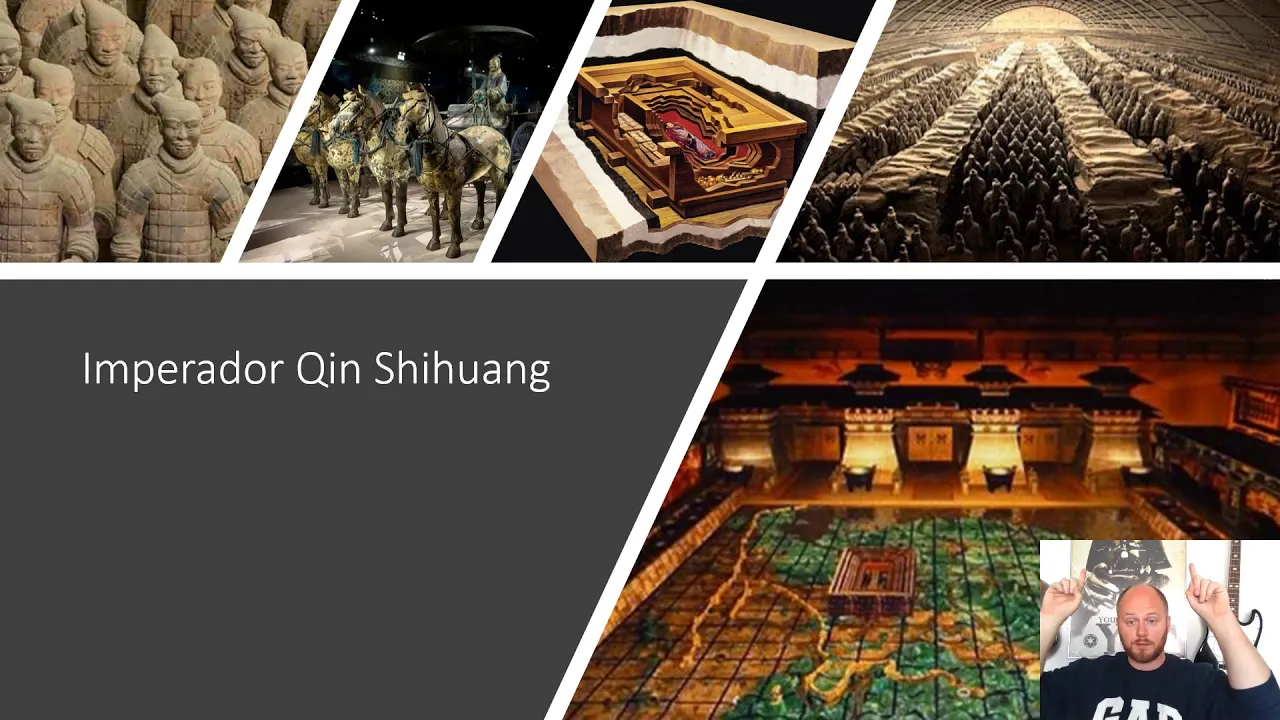
- Qin Shi Huang unified China around 200 BCE after defeating other kingdoms, establishing himself as the first emperor.
Qin Shi Huang's Legacy
- Qin Shi Huang sought immortality but inadvertently poisoned himself with mercury in pursuit of eternal life.
Chinese Civilization and Its Contributions
In this section, the speaker discusses the construction of a map representing unified China, the protection of Emperor Qin's tomb with a large mausoleum, and the army of terracotta warriors guarding it.
Construction of Map and Mausoleum
- After Emperor Qin's death, a map of unified China was built using mercury to represent rivers and conquered lands.
- The mausoleum protecting Emperor Qin's tomb was guarded by an army of terracotta warriors made from clay.
Terracotta Warriors
- Each terracotta warrior is unique in appearance, showcasing diverse physical features, facial characteristics, armor, and weapons.
- Special elements like horses in chariots were part of the terracotta army symbolically protecting Emperor Qin's tomb.
Influential Chinese Cultural Contributions
This segment explores significant cultural contributions from ancient China that continue to impact modern society.
Tea Culture and Porcelain Development
- Chinese culture introduced tea consumption practices globally, distinguishing between true tea made from tea leaves and other infusions.
- The refined art of porcelain production by the Chinese led to exquisite ceramic works highly valued worldwide.
Silk Weaving and Printing Innovation
- Chinese mastery in silk weaving from silkworm cocoons revolutionized textile production with luxurious silk fabric creation.
- Innovations like movable type printing pioneered by the Chinese enhanced text reproduction efficiency before Gutenberg's European developments.
Paper Invention and Gunpowder Utilization
- The invention of paper from plant cellulose by the Chinese replaced papyrus and parchment materials previously used for writing.