3. Variaciones genéticas y mutaciones en cáncer. Dr. Hugo Castro, Grupo Médico Angeles
Genetic Variation and Mutations
This section delves into genetic variation, mutations, and their role in cancer development. It explains the significance of variations in the genome, the impact of mutations on disease risk, and the distinction between benign genetic variations and harmful mutations.
Genetic Variation and Individuality
- Variations in the genome explain individual differences. Most genetic variations are benign, contributing to individuality.
- Polymorphisms or single nucleotide polymorphisms (SNPs) account for a small percentage of genomic variation in humans.
- Mutations are rare genetic variations that increase disease risk, such as cancer.
Types of Mutations and Cancer Genes
- Mutations can lead to cancer development by affecting oncogenes or tumor suppressor genes.
- Oncogenes promote cancer when overexpressed, while tumor suppressor genes protect against cancer.
- Activating mutations in oncogenes trigger tumor formation, while inhibitory mutations in tumor suppressor genes disrupt regulation mechanisms.
Inherited vs. Acquired Mutations
This section discusses how mutations can be acquired during life or inherited. It explores germline and somatic mutations, emphasizing their impact on cell proliferation and disease development.
Acquisition of Mutations
- Two ways to acquire mutations: germline (inherited) and somatic (acquired during life).
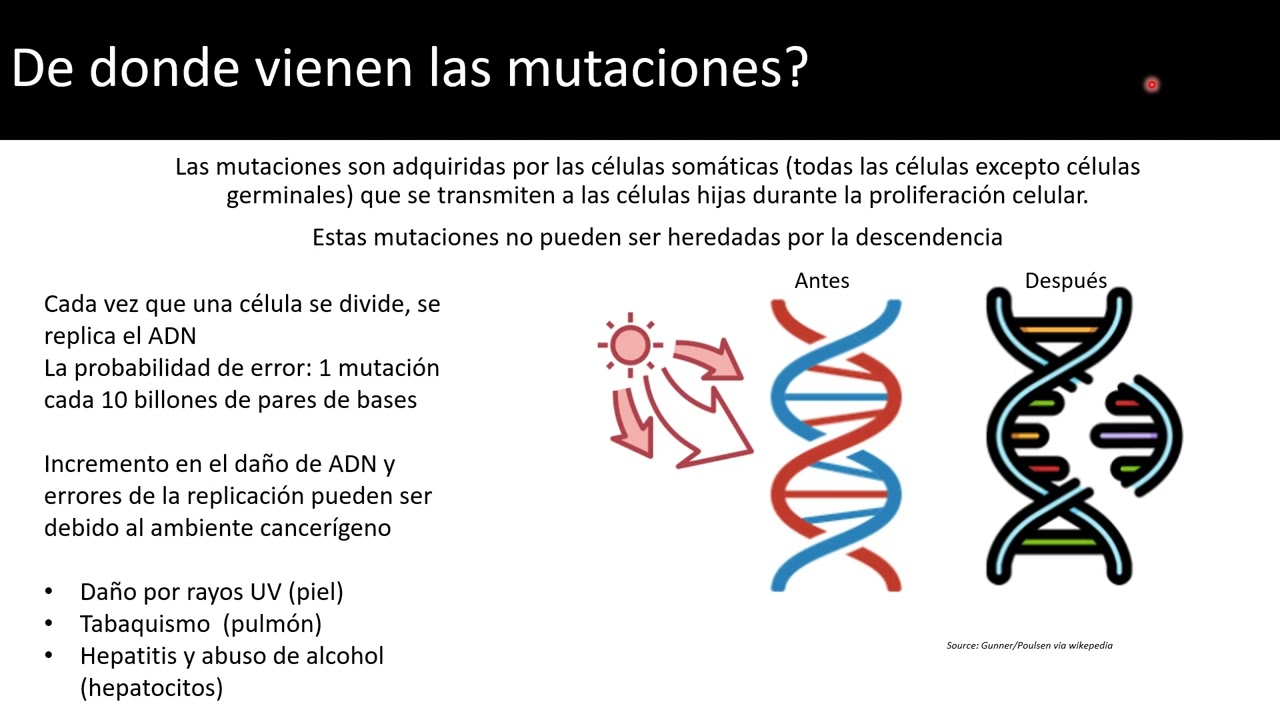
- Somatic mutations occur in body cells except eggs/sperm; they are not passed to offspring.
- Somatic mutations arise randomly during cell division due to DNA replication errors or environmental factors like UV radiation or chemicals.
- Environmental factors like UV rays can induce DNA damage leading to skin cancer risk.
Inherited Mutations
- Germline mutations occur in reproductive cells (egg/sperm) and are passed down through generations.
- Variability in germline contributes to familial resemblance but not identical offspring-parent match.
Detailed Explanation of Cancer Development
This section delves into the role of inherited mutations in cancer development, explaining how not all individuals with specific gene mutations develop cancer and highlighting the concept of multiple harmful mutations accumulating over time.
Inherited Mutations and Cancer Risk
- Individuals with a family history of cancer, particularly first and second-degree relatives, may have inherited mutations that increase their susceptibility to certain types of cancer.
- Not all women inheriting mutations in genes like BRCA1 and BRCA2 necessarily develop breast cancer due to the requirement for multiple harmful mutations accumulating over time.
Two-Hit Hypothesis
- The two-hit hypothesis or Knudson hypothesis explains why not all individuals with BRCA1 and BRCA2 mutations develop breast cancer, emphasizing the need for both copies of a gene to be affected for cancer initiation.
- To trigger cancer development, both copies of a gene must be impacted, leading to alterations either directly through mutation or indirectly by affecting DNA expression.
Accumulation of Mutations in Cancer Development
- Over an individual's lifetime, mutations accumulate gradually. For instance, exposure to factors like smoking or hepatitis B can lead to additional genetic alterations contributing to cancer formation.
- The diagram illustrates how initial hits on genes progress alongside lifestyle factors like smoking or sun exposure, culminating in genetic changes that promote cancer development.
Multistep Process in Cancer Formation
- Inherited germ line mutations elevate an individual's lifelong risk of developing cancer by necessitating fewer additional hits compared to acquired somatic mutations during life.
- Most cancers require diverse gene mutations across various pathways for cell survival and proliferation beyond normal regulatory mechanisms.
Genetic Instability and Resistance
- Cancer cells exhibit high genomic instability due to increased mutation rates compared to normal cells, fostering heterogeneity within tumor cells and contributing to treatment resistance.
- The progression from normal cell division control loss towards malignancy involves sequential mutational events affecting tumor suppressor genes and DNA repair mechanisms.
Cellular Mutation Rates Comparison
- Cells transitioning into malignancy undergo mutational changes disabling tumor suppressors while activating oncogenes. This transformation leads to uncontrolled cell growth characteristic of cancers.
- Genomic instability allows neoplastic cells with higher mutation rates than normal cells to persist without undergoing programmed cell death (apoptosis), promoting tumor heterogeneity.
Key Takeaways:
- Inherited genetic predispositions coupled with acquired environmental exposures contribute synergistically towards tumorigenesis through cumulative mutational events.
- The multistep process involving multiple genetic alterations underscores the complexity underlying cancer development and progression.